Monday, May 30, 2011
I've Been Diced! episode 17: The enduring appeal of Cosmic Encounter
Cosmic Encounter has been around for decades, with a dedicated fan base. What's the secret behind this boardgame's lasting appeal? Is Scott suffering from a Virus, a Fungus, or an enlarged Macron? Why are there so few games like Cosmic Encounter? During the Games Off The Beaten Track segment, we'll mention a few of those Cosmic-esque, Encounter-ish games.

Friday, May 20, 2011
Barriers to wargame entry
It's the week for good posts about wargaming. Anyone with an interest in wargames -- interested in diving into them, still getting your sea legs, or an old salt -- should read this post on Boardgame Geek. The author has some very thoughtful observations about wargaming's "barriers to entry," written from the perspective of a relatively new player. Some of the points he makes are not what you'd expect, given the received wisdom on this topic. For example, I strongly agree with his point made near the end of the post about relying too much on "gateway games."
Thursday, May 19, 2011
Excellent series about War In The East
If you're a wargamer, you should read Bruce Geryk's blog posts about War In The East, the PC Monsterspiel about the Eastern Front in WWII. War In The East isn't cheap – at $80, it's about as expensive as the typical Fantasy Flight game – so you can use Geryk's posts to decide whether it's the game for you. He also uses the occasion to muse about wargaming in general. How important are the details? Do wargames build credible narratives? What should games help you visualize? What assumptions do we make that perhaps we shouldn't?
Monday, May 16, 2011
I've Been Diced! episode 16: Electronic versions of boardgames
There's a bumper crop of electronic versions of our favorite board games. The desktop, laptop, mobile device, and browser provide electronic versions aplenty. But which are any good? What makes them good? Do they increase or decrease sales of the physical versions? Should boardgame publishers be cool with other people developing electronic versions of their titles? And will Paul ever get an AI opponent for Advanced Squad Leader? Plus, I recommend a few boardgame-like wargames for the PC. (c) 2011 Tom Grant
Tuesday, May 3, 2011
The choice between production quality and innovation

Here's a quick rundown of their heresies:
- Deliver games in ziploc bags, not boxes.
- Keep the component quality low, about what I might be able to do with my own laser printer. (In fact, VPG provides scans of many components for customers to print themselves. Click here for an example of why you might do that.)
- Keep the number of components low. For example, the Napoleonic 20 titles have no more than 20 unit counters per game.
- Don't sell through the normal retail channels. Forget Thoughthammer, Funagain, and all the online retailers, or the dwindling number of brick-and-mortar stores. VPG sells through their own web site, period.
- Emphasize solitaire play. A large percentage of VPG titles are solitaire only, and many of the rest have solitaire variants.
- Keep complexity low. In contrast with the clockwork games that have several interlocking game systems, VPG titles are far leaner.
The result? A lot of very affordable games on cool themes, at a higher than average level of critical success. Even when tough reviewers find flaws within a particular VPG title, they also find a lot to recommend them. (Click here for an example.)

To illustrate, let's set the time machine controls back to 1977, the year that Metagaming published OGRE. The people at Metagaming don't know it yet, but OGRE and its sequel, GEV, will continue to be played for the next 25 years. OGRE is a creative leap that might easily fail, a game in which one player has only a single counter on the map. The game could be an exciting struggle between two very different combatants, or a game in which only one side has interesting choices to make.
Not all of Metagaming's first titles will be successes. Warp War, for example, will get some good early buzz, but it will disappear from gaming tables in a couple of years. Rivets looks like a cute game of battling robots, but it will wind up in the scrap heap rather quickly. However, Melee will turn into an enduring favorite that spawns another game, Wizards, that will evolve into a new RPG system, The Fantasy Trip, which will evolve again into GURPS.

During the same year, Avalon Hill is enjoying a fantastic run of successful innovation. In 1977, Avalon Hill published Squad Leader, Victory In The Pacific, and Rail Baron. Other titles in Avalon Hill's 1977 catalog won't reach the same status as classics, but the company's rigorous playtesting has led to a pretty good success rate. Avalon Hill may be investing more in components (mounted maps, high-quality box art, etc.), but the games that these components bring to life are, on average, pretty solid.
SPI, the other wargame giant of the hobby in 1977, seems to be doing just as well. (Warning: If you are an older grognard with fond memories of SPI, you may be offended by what I'm about to say.) However, that success is somewhat fleeting. The titles that SPI publishes in 1977 are not going to have the same enduring appeal of OGRE or Squad Leader. There will be noble failures, such as War Of The Ring and A Mighty Fortress. With a few more development cycles, these games might have been classics. Unfortunately, most of SPI's 1977 publications -- Canadian Civil War, Raid!, The Conquerors, StarSoldier -- will turn out to be immediately forgettable. In 25 years, very few will remember them, and no one will be playing them.

The year 1977 in the history of boardgaming has an obvious moral: successful innovation doesn't come for free. The average SPI or Avalon Hill game takes more money to publish than a Metagaming microgame, which makes it more expensive for the individual gamer to buy. The customers of Avalon Hill and SPI come to expect a certain quality of presentation in their games, so these companies have to invest more in graphic design, printing, and distribution. With finite resources, each of these companies has to choose priorities: production quality over number of titles? Number of titles over time spent on design review and playtesting?
Avalon Hill managed to juggle these priorities more successfully than SPI, but both companies dropped the ball repeatedly. Metagaming did too, but their flops, such as Ice War, left customers far less angry than expensive failures like Princess Ryan's Star Marines. (And which does less damage as an introduction to the hobby?)

The entire boardgame hobby ecosystem benefits from having these lower-cost, lower-risk laboratories of innovation like Metagaming and Victory Point Games. Unfortunately, not everyone with a loud opinion on BGG, the main forum for discussion about boardgames, recognizes that fact. Many well-produced games that get high praise from BGGers disappear into obscurity as quickly as Canadian Civil War. Some people reflexively sneer at games that lack the rococo aesthetic of FFG titles. And others don't recognize the trade-off that companies have to make among competing priorities, such as quality of the game design and quality of the game components.
Here's a moment when this choice between production quality and game quality matters. Many people are unhappy that Games Workshop didn't publish more copies of Space Hulk third edition. Space Hulk is a great game, and it's a shame that it's now very expensive to get a copy of any edition. Meanwhile, Victory Point games has a Space Hulk-ish title, Forlorn Hope, that by some accounts is a better game. Rather than bemoan the short print run of Space Hulk, or spend close to $200 on a copy, why not take a chance with Forlorn Hope? Unless your only interest in Space Hulk is the miniatures, you may get a lot more enjoyment out of a much smaller outlay of cash. VPG will put that money into publishing other games you might want to play, many with novel mechanics and interesting themes. And you'll be able to buy several of them for the cost of one copy of Space Hulk.
I've Been Diced! episode 15: Successors is where the love begins
Our main topic is Successors, the 4-player card-driven wargame from GMT. We really like it, but that's just the beginning of the lovefest this episode. We also love Magic Realm, which for most of us finally just clicked. Dave compares Magic Realm to Victor Hugo's novels, and Tom compares it to Super Street Fighter. We also like some new games, such as Fighting Formations: Grossdeutschland Motorized Infantry Division, Astra Titanus, and 51st State. And we even love Paul behind his back! Finally, Tom discusses why we love OGRE, and would love more games like it. (c) 2011 Tom Grant
Saturday, April 9, 2011
Great news for wargaming and tablet devices
The newly-founded Project Simonsen is working on porting several wargames (Across Five Aprils, RAF, Washington's War, and a few others) to tablet devices. That's great news for wargaming on my iPad, and maybe wargaming in general, if Project Simonsen helps recruit new players to the hobby. At the very least, I will buy every game in their catalog, if they succeed at what they've defined as their mission.
Friday, April 8, 2011
Fighting Formations forming up for fighting
What a great gift from the UPS guy for the weekend. My pre-ordered copy of Fighting Formations: Grossdeutschland Infantry Division was waiting on the doorstep when I stepped out to run an errand. If you don't know why this is an occasion for wargamer nerdgasm, just string these words together:
- Designer of Combat Commander
- New game system, moved up to the platoon level
- Now with tanks
God bless you, GMT Games.
A map site full of historical awesomeness
Click here now. Need further convincing? If you have any interest in history, you'll check out the Conflict History web site, one of the best mash-ups I've ever seen. Pick any date in history, and you'll see the conflicts that were happening around the globe at that moment. Yowza.
Thursday, April 7, 2011
An insane idea for a boardgame?

That being said, it is fair to talk about what Mansions Of Madness represents, design-wise. It may be the game that didn't need to be made, since it crosses some boundaries that perhaps should be respected. While not everyone would consider games to be an art form, game designers can learn a few things about game genres from artistic genres.
NOT EVERY ARTISTIC EXPERIMENT IS NECESSARY
About twenty years ago, Frank Stella argued, in an article in The New Republic (if memory serves), that some aspects of modern art were played out. Once you've challenged the assumptions behind art, what's the point of continuing to challenge them, over and over again? Marcel Duchamps signing a urinal was a profound statement. Signing it a hundred more times would be idiotic.

It's hard to write about art without lapsing into pompous blather. If you lasted this far, I'm sure you're wondering what Frank Stella's opinions about modern art have to do with boardgames. The line between the two is actually pretty short.
Some of the best games are the result of brave designs with form. Up Front!, for example, threw out the map that every wargame is assumed to have. Space Alert replaced the normal definition of a turn, the amount of time in which the player decides to act, with a fixed interval over which the players had no control. Tales Of The Arabian Nights has a scoring system, but the real focus of the game is the stories it generates. Cosmic Encounter threw out the idea that, in a multi-player game, everyone has to start with roughly the same capabilities.
But not every such experiment is a success. Anyone remember Everway? If you don't, here was the premise: forget depending on the usual conventions of a role-playing game, such as having a scenario or a gamemaster. Give people cards with fantasy art, drawn at random, and let them make up their own story. Don't see many people playing Everway these days. Come to think of it, I don't remember seeing anyone playing the game after it was first published in 1995.
Another failed experiment was the Shadowrun giant miniature game, designed to satisfy any action figure fan's desire to set up mock battles, which is almost pointless without supplying your own sound effects (Pew! Pew!). Which, of course, begged the question, "Why do I need help setting up mock battles and shouting Pew! Pew!" Nice action figures, terrible and ultimately pointless game.
Just because you can play with form, doesn't mean that you should. Nowhere is that maxim more visible when people try to replicate one genre in another.
VIDEO GAME MOVIES STINK, PERIOD
Other than to make a quick buck, there's little reason to try to port the experience of a video game into a movie. If you want to pick up a controller and experience the thrill of jumping over pits, or shooting cyberdemons, or winning a martial arts bout, you'd play Super Mario Brothers, or Doom, or Street Fighter. Watching someone else play one of those games is nowhere near as satisfying as playing it yourself.

And here's where the whole idea behind Mansions Of Madness seems ill-conceived. Certainly, there are some role-playing genres that can be translated into a board game. The iconic D&D dungeon crawl already feels like a commando mission, so it's not hard to turn a D&D session into a tactical boardgame. That's the direction that Wizards of the Coast already took D&D in its fourth edition, which may have offended many RPG players, but clearly has reached some market of people willing to buy all the fourth edition materials.
Because of the nature of the story in a fantasy RPG like D&D, it's not hard to translate the role-playing experience into a boardgame experience. In both cases, combat is the central mechanic of the game. Hard-fought battles between heroes and monsters, in which the heroes have a pretty good chance of winning, is the motif in both cases. While you might not like a particular D&D-like boardgame, such as Castle Ravenloft, you might be perfectly happy with another, such as Descent. Your choice depends on which aspects of the combat-heavy D&D experience you enjoy, and how well the designer provides them.
But that's not the type of story that the Call Of Cthulhu RPG tells.
WHY DOES THE INDESCRIBABLE CREATURE HAVE A MINIATURE?
The tropes of the Cthulhu Mythos are so familiar, so frequently repeated across hundreds of stories, that they're practically cliche. Doomed protagonist? Check. Humanity dwarfed by cosmic horrors? Check. Sanity-shattering events? Check. Alien beings with lots of pseudopods and/or tentacles? Check.
Despite these often-repeated elements, the Cthulhu Mythos somehow avoids turning into a cliche. While it certainly helps that authors can transplant the Mythos into other settings than New England in the 1920s, that's clearly not the only reason for the Mythos' enduring appeal. Another important reason is that the Mythos is largely incomplete.
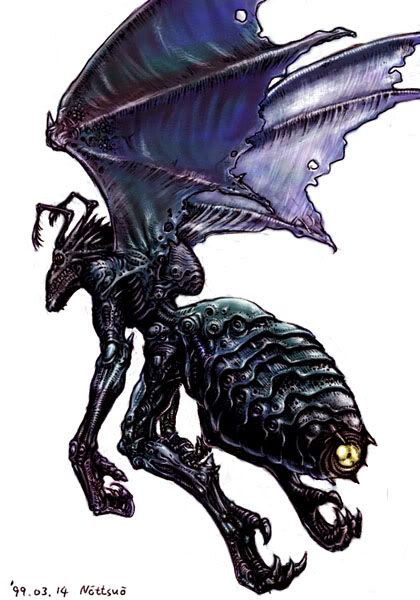
The other gap, the scant information about any individual Mythos creature, is important for a different reason: keeping the stories scary. While Mythos fans might have the entire menagerie of Lovecraftian creatures memorized, they really have very scant information about the Mi-Go, shoggoths, or shantaks. Lovecraft's own descriptions are more suggestive, such as this description of the byakhee:
There flapped rhythmically a horde of tame, trained, hybrid winged things ... not altogether crows, nor moles, nor buzzards, nor ants, nor decomposed human beings, but something I cannot and must not recall.Of course, some very talented artists have tried to depict byakhee, based on those very few words. But which is more disturbing, the verbal description, which suggests something more horrible than words can capture, or even the best painting or sketch of a byakhee?
Interestingly, the least memorable of Lovecraft's own creatures was Wilbur Whateley. Despite being the offspring of Azathoth, I can't remember another instance of the bastard offspring of a Great Old One and humans, across countless Mythos stories. Poor Wilbur is a lot less interesting because Lovecraft explained him too much, leaving too little to the imagination:
The thing that lay half-bent on its side in a foetid pool of greenish-yellow ichor and tarry stickiness was almost nine feet tall, and the dog had torn off all the clothing and some of the skin. It was not quite dead, but twitched silently and spasmodically while its chest heaved in monstrous unison with the mad piping of the expectant whippoorwills outside. Bits of shoe-leather and fragments of apparel were scattered about the room, and just inside the window an empty canvas sack lay where it had evidently been thrown. Near the central desk a revolver had fallen, a dented but undischarged cartridge later explaining why it had not been fired. The thing itself, however, crowded out all other images at the time. It would be trite and not wholly accurate to say that no human pen could describe it, but one may properly say that it could not be vividly visualised by anyone whose ideas of aspect and contour are too closely bound up with the common life-forms of this planet and of the three known dimensions. It was partly human, beyond a doubt, with very man-like hands and head, and the goatish, chinless face had the stamp of the Whateleys upon it. But the torso and lower parts of the body were teratologically fabulous, so that only generous clothing could ever have enabled it to walk on earth unchallenged or uneradicated.Yeesh, that's almost as long as this blog post.
Above the waist it was semi-anthropomorphic; though its chest, where the dog’s rending paws still rested watchfully, had the leathery, reticulated hide of a crocodile or alligator. The back was piebald with yellow and black, and dimly suggested the squamous covering of certain snakes. Below the waist, though, it was the worst; for here all human resemblance left off and sheer phantasy began. The skin was thickly covered with coarse black fur, and from the abdomen a score of long greenish-grey tentacles with red sucking mouths protruded limply. Their arrangement was odd, and seemed to follow the symmetries of some cosmic geometry unknown to earth or the solar system. On each of the hips, deep set in a kind of pinkish, ciliated orbit, was what seemed to be a rudimentary eye; whilst in lieu of a tail there depended a kind of trunk or feeler with purple annular markings, and with many evidences of being an undeveloped mouth or throat. The limbs, save for their black fur, roughly resembled the hind legs of prehistoric earth’s giant saurians; and terminated in ridgy-veined pads that were neither hooves nor claws. When the thing breathed, its tail and tentacles rhythmically changed colour, as if from some circulatory cause normal to the non-human side of its ancestry. In the tentacles this was observable as a deepening of the greenish tinge, whilst in the tail it was manifest as a yellowish appearance which alternated with a sickly greyish-white in the spaces between the purple rings. Of genuine blood there was none; only the foetid greenish-yellow ichor which trickled along the painted floor beyond the radius of the stickiness, and left a curious discolouration behind it.
 For these reasons, I wonder why many people are raving (no, not in that way) about the Mansions Of Madness miniatures. While I'm not a huge fan of two-dimensional depictions of the Mythos menagerie, I'm really turned off by three-dimensional ones. At least with 2D images, you can get a little crazy with what you're depicting. In 3D, you're stuck with what's not only possible, but reasonable to manufacture as a plastic miniature. The shoggoth in Mansions Of Madness looks more like a potato angry for being left out in the sun too long than an indescribable horror, and that might be the best anyone can do with a miniature.
By the way, the principle of leaving a lot to the imagination is hardly unique to Lovecraft. Some of the best horror movies don't show much of the monster, if anything. In the first Alien movie, we never get a really good look at the creature. (In fact, we're so ignorant of its anatomy that we're surprised as Ripley is when it uncoils from its hiding place in the shuttle.) The monster in Curse of the Demon was pretty frightening until the very end of the movie, when the filmmakers decided to show it. Ditto for the monster in Forbidden Planet. The original Cat People was a very disturbing story, without ever showing Simone Simon turning into a panther, or even seeing the panther at all except for a couple of scenes.
So, I'm not thrilled with the miniatures. Coulda done without 'em. But you might make a similar complaint about Arkham Horror, which has way more pictures of Mythos creatures than Mansions Of Madness ever will, even after the inevitable expansions. But there's one key difference between those two games: Arkham Horror is not trying to be the boardgame equivalent of the Call Of Cthulhu role-playing game.
SUSPENSE DEPENDS ON THE UNEXPECTED
From its first edition onwards, Call Of Cthulhu has always stood apart from most other RPGs (except, perhaps, for other horror RPGs, many of which have tried to capture what made CoC great). Our beloved memories of a game like D&D usually center on epic battles, fought at high risk for high stakes, in which Our Heroes usually emerge victorious. The memorable moments in Call Of Cthulhu involve people dying in horrible ways (dissolving into piles of goo, pulled beneath the waves, swallowed whole by an amorphous horror, etc.), or things going catastrophically wrong (framed by cultists, allowed a major villain to escape, went insane at an extremely inopportune moment, etc.).
 While the game is designed to deliver these outcomes, Call Of Cthulhu also benefits from the unbounded nature of role-playing games. There is no winning or losing, though there may be outcomes that are more desirable than others. Players will do the darndest things, often making horribly bad decisions or dice rolls, or pulling out brilliant improvisations at a critical moment. If the campaign is going in a bad direction, the GM can make adjustments before running the next session.
In fact, "campaign" is another way of saying that CoC is, to use James Carse's term, an infinite game. The point of the game, as is the case with RPGs in general, is continuing to play the game. While the appeal of continued play might take different forms, with different RPGs, in the case of CoC, it's the delicious anticipation of what will happen next. While CoC usually falls under the category of horror RPGs, suspense plays just as great a role in CoC.
The contrast with Mansions Of Madness is pretty clear. While MoM tries to be a story-telling game, it's a consummately finite game. You play a scenario, and then you're done. You either win or lose. There might be story-telling elements available in the game, in the form of flavor text or clues, but you can easily lose track of these elements, especially since the game keeps you focused on its mechanics, such as finding clues and solving puzzles. In CoC, the story-telling is more important than the mechanics.
While MoM begs this comparison, Arkham Horror does not, because Arkham Horror is not trying to be Call Of Cthulhu in a box. It's clear from the very beginning that the meaning of AH is not the same as CoC, even though the theme is the same. (In fact, AH might be one of the best illustrations of the difference between theme and meaning,) The theme of both CoC and AH is the Cthulhu Mythos. The meaning of AH, the experience or mechanics that the game mechanics create, is a race against time that the players can easily lose. That's not the meaning of CoC in general (though individual sessions might have that motif). AH never tries to be frightening, or horrifying, or morally disturbing.
 To achieve its aims, AH does not need to be open-ended. In fact, fudging is equivalent to cheating. Many of the principles of good RPGs, as discussed in this excellent presentation, would only serve to make an already lengthy game even longer, perhaps to an intolerable degree. (So forget about creating sandboxes or showmanship.) The final bit of advice, "Enable risk-taking," is completely irrelevant, since winning AH depends on minimizing risks.
In contrast, any game that tries to be "CoC in a box" must heed these principles of running a good RPG. Which, more or less, means that not being an RPG is a bit of a problem. Since CoC is all about storytelling, in which the worst outcomes (or the risk of them) are sometimes the most desirable, it's far less suited to translation into a boardgame than D&D and many other types of RPG.
AN UNSPEAKABLE GAME THAT SHOULD NOT BE!
And now we return to our discussion of art. In modern art, or game design, it might be interesting for the artist or designer to experiment with form. However, not every experiment, including ones that might be successful from a strictly technical perspective, are necessarily interesting or even meaningful for the audience.
In one of the most memorable sessions of CoC with my long-lost game group, I found myself arguing on one side of a moral dilemma with another player character. A typical Unspeakable Creature That Should Not Be was rampaging through an insane asylum, located on a lonely, storm-swept island where we were all stranded. Faced with the likelihood that we were all going to die, my PC took a strictly utilitarian view: I have a spell that will summon another creature, under my control, which might defeat the one about to kill us. Unfortunately, the spell requires a human sacrifice. But we're all going to die, including that senile octagenarian in the wheelchair over there. So...The other PC had a much, much different view. Sure, we were all going to die, but once you start trafficking with the Great Old Ones, even worse things than death might result.
That's the kind of moment that makes CoC a fantastic RPG. While I might have lost the ability to sustain the commitment needed for a regular RPG group, I still remember our CoC sessions with great fondness. That's an experience, and a memory, that I fear MoM can never create.
[P.S. For a similarly skeptical view of Mansions Of Madness, pass through this interdimensional portal to Chris Farrell's blog.]
Friday, March 18, 2011
I've Been Diced: episode 14: Mansions Of Madness
It's a mansion! A maaaaan-shuuuuuun!
This episode, we give an introduction to FFG's new Cthulhu Mythos-based boardgame, Mansions Of Madness. Then, after playing it, we give our first impressions. No, R'lyeh, we do. Plus, I put in a quick word for a few other Lovecraftian boardgames off the beaten path. And finally, a recent review of GMT's The Spanish Civil War gets my wargaming goat. You don't want to get that particular goat with a thousand young irked with you, believe me. (c) 2011 Tom Grant
This episode, we give an introduction to FFG's new Cthulhu Mythos-based boardgame, Mansions Of Madness. Then, after playing it, we give our first impressions. No, R'lyeh, we do. Plus, I put in a quick word for a few other Lovecraftian boardgames off the beaten path. And finally, a recent review of GMT's The Spanish Civil War gets my wargaming goat. You don't want to get that particular goat with a thousand young irked with you, believe me. (c) 2011 Tom Grant
Friday, March 11, 2011
I've Been Diced! episode 13: Guilty pleasure board games
Confession is good for the soul, they say. Well, you might have second thoughts after you hear us reveal our guilty pleasure board games. Plus, this week's game off the beaten path is Caesar's Gallic Wars. (c) 2011 Tom Grant
Monday, March 7, 2011
Another discussion of randomness
A recent episode of Three Moves Ahead took on my latest favorite topic, the role of randomness in games. Three Moves Ahead occasionally delves into boardgames, though its real bailiwick is computer strategy games. However, if you start talking about randomness, it's hard not to focus on boardgames, since they expose the random elements in ways that computer games don't. Or, as the panel in this podcast explore, maybe randomness plays a more important role in a game like Successors or Command & Colours: Ancients than it does in Starcraft? A great discussion, definitely worth a listen.
Thursday, March 3, 2011
Randomness in boardgames: simulation
[For other posts in this series, click here, here, and here.]
When I started this series of blog posts, I deliberately avoided talking about the most obvious reason for including random elements in a game. For a game to be a credible simulation of a situation, even if completely fictional (for example, elves and orcs playing jai alai), it needs randomness. For reasons that I don't fully fathom, this argument for randomness sometimes leads into very heated discussions, so I thought I'd first tackle the less controversial but no less important reasons for randomness in boardgames. But there's no avoiding the necessity of randomness in anything that resembles reality.
No human activity is immune from having Dame Fortune appear unexpectedly to ruin your plans. Some situations may introduce fewer random elements than others: for example, you'll face fewer problems crossing the street than traveling to Vladivostok.You might stumble crossing the street, which is unfortunate. Traveling to Vladivostok, you might lose your passport, bad weather might cancel your flight, a pickpocket might steal your wallet, and no end of other mishaps might occur, orders of magnitude more than might happen crossing the street.
 EXPECT PEOPLE NOT TO LISTEN TO YOU
Nowhere can you see the importance of randomness in simulations than in wargames. There is a lot of randomness in real-world combat, so it's hard to suspend disbelief when playing a completely deterministic wargame. Designers may choose to simulate different random elements, even when they are depicting the same historical event. If you play a Gettysburg wargame that users a chit pull system (for example, Across Five Aprils), you're not certain when a particular general will get his troops moving. Another Gettysburg game, such as Gettysburg: Badges of Courage, might give the surrogate Meade or Lee more control over when corps commanders order their troops to move or fight.
Every wargame designer imposes some upper limit on the amount of randomness in a game, and where to include it. Many designers are hesitant to include too many random elements in the command and control aspects of the game, even though the unpredictability of C3I is a major issue in real-world conflicts. After all, one of the most famous anecdotes about the battle of Gettysburg is Ewell's failure to take Cemetery Ridge, despite Lee's direct (but vague) order to do so. Whatever side you take on Ewell's hotly-debated decision, the issue boils down to one of C3I.
The importance of randomness in simulations goes beyond the narrative of a particular battle. (What if Ewell had advanced on Cemetery Hill? What if McClellan hadn't received a copy of Lee's Special Order 191, wrapped around a bundle of cigars?) Uncertainty shapes how military organizations structure themselves, and how they operate. If randomness is important for the narrative, it's also important for how you depict the major characters and their actions.
BUT PREPARE FOR THE UNEXPECTED
If you're not a military history buff, you might not understand why historians stress divisions over other levels of organization in accounts of WWII battles. In a book or documentary, you'll more likely hear about the Screaming Eagles of the 101st Airborne division, not the 2nd Brigade of the 101st. The uncertainties of command and control are a major reason for why divisions were the atomic unit of battle for the US army in World War II. Every army is a bureaucracy, with the same limitations on the amount of flexibility you can allow into the organization without introducing too much chaos.
 The Army decided to make the division the smallest unit "capable of independent operations." Or, to put it another way, since the Army wanted to expect commanders at some level of the hierarchy to take the initiative, it decided to grant that latitude to the divisional commander. When assembling for battle, the Army could then attach or detach lower-level units (artillery, armor, etc.) to the division to modify its combat power. This model also made the lines of accountability clear more clear for success and failure on the battlefield, despite the tendency of junior and senior commanders to point fingers at each other.
Uncertainty shapes the way in which commanders make their plans. The more complex the plan, the more points at which it can break down. A chief defect of Yamamoto's plan for the invasion of Midway, for example, is his decision to break the fleet into four separate task forces. The probability that all four task forces arriving on station, as planned, was extremely low, leading many later commentators (including some Japanese admirals) to highlight Japanese overconfidence (or "victory disease"). Had Yamamoto not scattered his ships and planes in this fashion, the Japanese fleet would have been better deployed to provide mutual protection while simultaneously executing strikes against the US fleet and Midway island.
 PICK YOUR COMFORT ZONE FOR RANDOMNESS
How does a wargame simulate the risks that complex plans introduce? Frankly, most of them don't. You rarely see the importance of planning in actual combat, since units always take orders, they never get lost, and they don't encounter other mishaps when moving from point A to B. Wargames that do include the planning element, such as Fields Of Fire and the Tactical Combat Series, stand out starkly from the hundreds of other wargames that omit this feature.
Designers have some justification for not introducing too much randomness into the most basic tasks in a wargame, such as moving units around the map. Many of their customers complain loudly when a game doesn't allow this kind of unrealistic control over the battlefield, so designers are just responding to their market. To keep the experience of playing a wargame credible, you need to keep some element of randomness somewhere -- if not in the C3I aspects of the game, then in the combat results mechanics, or the timing of unit activation, or something else.
When I started this series of blog posts, I deliberately avoided talking about the most obvious reason for including random elements in a game. For a game to be a credible simulation of a situation, even if completely fictional (for example, elves and orcs playing jai alai), it needs randomness. For reasons that I don't fully fathom, this argument for randomness sometimes leads into very heated discussions, so I thought I'd first tackle the less controversial but no less important reasons for randomness in boardgames. But there's no avoiding the necessity of randomness in anything that resembles reality.
No human activity is immune from having Dame Fortune appear unexpectedly to ruin your plans. Some situations may introduce fewer random elements than others: for example, you'll face fewer problems crossing the street than traveling to Vladivostok.You might stumble crossing the street, which is unfortunate. Traveling to Vladivostok, you might lose your passport, bad weather might cancel your flight, a pickpocket might steal your wallet, and no end of other mishaps might occur, orders of magnitude more than might happen crossing the street.

Nowhere can you see the importance of randomness in simulations than in wargames. There is a lot of randomness in real-world combat, so it's hard to suspend disbelief when playing a completely deterministic wargame. Designers may choose to simulate different random elements, even when they are depicting the same historical event. If you play a Gettysburg wargame that users a chit pull system (for example, Across Five Aprils), you're not certain when a particular general will get his troops moving. Another Gettysburg game, such as Gettysburg: Badges of Courage, might give the surrogate Meade or Lee more control over when corps commanders order their troops to move or fight.
Every wargame designer imposes some upper limit on the amount of randomness in a game, and where to include it. Many designers are hesitant to include too many random elements in the command and control aspects of the game, even though the unpredictability of C3I is a major issue in real-world conflicts. After all, one of the most famous anecdotes about the battle of Gettysburg is Ewell's failure to take Cemetery Ridge, despite Lee's direct (but vague) order to do so. Whatever side you take on Ewell's hotly-debated decision, the issue boils down to one of C3I.
The importance of randomness in simulations goes beyond the narrative of a particular battle. (What if Ewell had advanced on Cemetery Hill? What if McClellan hadn't received a copy of Lee's Special Order 191, wrapped around a bundle of cigars?) Uncertainty shapes how military organizations structure themselves, and how they operate. If randomness is important for the narrative, it's also important for how you depict the major characters and their actions.
BUT PREPARE FOR THE UNEXPECTED
If you're not a military history buff, you might not understand why historians stress divisions over other levels of organization in accounts of WWII battles. In a book or documentary, you'll more likely hear about the Screaming Eagles of the 101st Airborne division, not the 2nd Brigade of the 101st. The uncertainties of command and control are a major reason for why divisions were the atomic unit of battle for the US army in World War II. Every army is a bureaucracy, with the same limitations on the amount of flexibility you can allow into the organization without introducing too much chaos.

Uncertainty shapes the way in which commanders make their plans. The more complex the plan, the more points at which it can break down. A chief defect of Yamamoto's plan for the invasion of Midway, for example, is his decision to break the fleet into four separate task forces. The probability that all four task forces arriving on station, as planned, was extremely low, leading many later commentators (including some Japanese admirals) to highlight Japanese overconfidence (or "victory disease"). Had Yamamoto not scattered his ships and planes in this fashion, the Japanese fleet would have been better deployed to provide mutual protection while simultaneously executing strikes against the US fleet and Midway island.

How does a wargame simulate the risks that complex plans introduce? Frankly, most of them don't. You rarely see the importance of planning in actual combat, since units always take orders, they never get lost, and they don't encounter other mishaps when moving from point A to B. Wargames that do include the planning element, such as Fields Of Fire and the Tactical Combat Series, stand out starkly from the hundreds of other wargames that omit this feature.
Designers have some justification for not introducing too much randomness into the most basic tasks in a wargame, such as moving units around the map. Many of their customers complain loudly when a game doesn't allow this kind of unrealistic control over the battlefield, so designers are just responding to their market. To keep the experience of playing a wargame credible, you need to keep some element of randomness somewhere -- if not in the C3I aspects of the game, then in the combat results mechanics, or the timing of unit activation, or something else.
Monday, February 21, 2011
I've Been Diced! episode 12: High Frontier
High Frontier is an ambitious game about the exploration and exploitation of the solar system. This episode, we outline the rules of the basic game for new players, and we give a few initial thoughts about the game. Plus, our game off the beaten track looks at space as a much less inviting place. (c) 2011 Tom Grant
Friday, February 18, 2011
Hating the haters of "hex and counter" wargames
Every once in a while, you'll see a forum post, blog entry, or other piece of content that takes disparages traditional "hex and counter" wargames. While I can forgive a little bit of adolescent arrogance ("These are a new generation of wargames, old man!"), at some point you have to call BS on exaggerations or falsehoods. Like, say, the false assumption that newer wargame formats can't co-exist with the older types.
Clearly, wargame design needed some shaking up. When I was a subscriber to Strategy & Tactics, I received in every issue yet another treatment of an historical event, always jammed into the same medium of hexes, combat result tables (CRTs), zones of control, and counters depicting combat and movement ratings. Innovation was pretty limited: for example, the "sticky" zones of control in Panzergruppe Guderian inspired far more conversation and controversy than they probably deserved.
Impatience with this very constricted approach started a very long time ago. Courtney Allen, for example, was responsible for two of the biggest divergences from traditional "hex and counter" designs. (It's probably more accurate to call them "hex and CRT" games, but the "hex and counter" moniker is already too well-established to dispute it.) Storm Over Arnhem (1981) shifted to an area movement model, introduced a combat system that did not rely on a CRT, and added a novel activation system that gave a better feel for the ebb and flow of combat. Up Front! (1983) did away with a map altogether, made a deck of cards the mechanism for giving orders, and replaced die rolls with the same deck of cards. Since Avalon Hill marketed Up Front! as "the Squad Leader card game," this radically new design outraged many Squad Leader fans who expected something closer to the boardgame experience.
Courtney Allen is hardly the only designer to have made the move away from the original "hex and counter" paradigm. However, he does show, with just one notable example, of how the shift away from the old paradigm started a lot earlier than some "hex and counter" critics realize.
None of these designers thought that they were abandoning maps with hexes, or combat resolution systems that depended on comparing a die roll to a chart, or counters that contained combat and movement ratings. We The People, for example, created the "card-driven game" mechanics that are now a pillar of modern wargame design. We The People also used a point-to-point map of the American colonies, instead of hex grid, and it replaced die rolling with a combat deck.
 We The People was a breakthrough game, but I'm afraid that some observers misread what its innovations meant for the hobby. After We The People, Mark Herman designed games with hex-based maps (Empire Of The Rising Sun), CRTs (Washington's War), and turns that didn't depend on card plays (the continuing Great Battles Of History series, in ongoing collaboration with Richard Berg).
The wargame designers who invented card-driven turns, abandoned hex grids, replaced counters with blocks, or made other important innovations did not think that they were invalidating the old conventions of wargames. Quite the opposite: they felt that they were expanding the palette of design options, not switching to a new but equally limited range of options.
 To make this point, I'm including two maps from recent games about the Spanish Civil War. Crusade & Revolution's map is point-based; The Spanish Civil War's map is a traditional hex grid. In no way is one map choice better than the other. The conclusion: Both are maps of Spain. The Spanish Civil War does a fine job of depicting the conflict with its "old school" mechanics. (See this video review for details.) There's no reason to turn up your nose at it, just because its map doesn't look like Paths Of Glory's.
In fact, the "hex and counter" paradigm may be making a bit of a comeback. In many cases, a hex-grid map is a better way to depict geography, or at least an equally good one. For instance, hexes can simplify the task of depicting the area of operations for air power at the operational and strategic level. A CRT can eliminate some of the weirder results that "buckets of dice" mechanics can generate. We're seeing the plus sides of hex grids and CRTs in games like The Spanish Civil War, Corp Command: TotenSonntag, the popular OCS and SCS series, and countless other titles.
So, Junior, before you slam the old order too hard, remember that you may grow up to become the very thing you're now disparaging. That's OK, since recognizing false dichotomies for what they are is a sure sign of maturity.
Clearly, wargame design needed some shaking up. When I was a subscriber to Strategy & Tactics, I received in every issue yet another treatment of an historical event, always jammed into the same medium of hexes, combat result tables (CRTs), zones of control, and counters depicting combat and movement ratings. Innovation was pretty limited: for example, the "sticky" zones of control in Panzergruppe Guderian inspired far more conversation and controversy than they probably deserved.
Impatience with this very constricted approach started a very long time ago. Courtney Allen, for example, was responsible for two of the biggest divergences from traditional "hex and counter" designs. (It's probably more accurate to call them "hex and CRT" games, but the "hex and counter" moniker is already too well-established to dispute it.) Storm Over Arnhem (1981) shifted to an area movement model, introduced a combat system that did not rely on a CRT, and added a novel activation system that gave a better feel for the ebb and flow of combat. Up Front! (1983) did away with a map altogether, made a deck of cards the mechanism for giving orders, and replaced die rolls with the same deck of cards. Since Avalon Hill marketed Up Front! as "the Squad Leader card game," this radically new design outraged many Squad Leader fans who expected something closer to the boardgame experience.
Courtney Allen is hardly the only designer to have made the move away from the original "hex and counter" paradigm. However, he does show, with just one notable example, of how the shift away from the old paradigm started a lot earlier than some "hex and counter" critics realize.
None of these designers thought that they were abandoning maps with hexes, or combat resolution systems that depended on comparing a die roll to a chart, or counters that contained combat and movement ratings. We The People, for example, created the "card-driven game" mechanics that are now a pillar of modern wargame design. We The People also used a point-to-point map of the American colonies, instead of hex grid, and it replaced die rolling with a combat deck.

The wargame designers who invented card-driven turns, abandoned hex grids, replaced counters with blocks, or made other important innovations did not think that they were invalidating the old conventions of wargames. Quite the opposite: they felt that they were expanding the palette of design options, not switching to a new but equally limited range of options.

In fact, the "hex and counter" paradigm may be making a bit of a comeback. In many cases, a hex-grid map is a better way to depict geography, or at least an equally good one. For instance, hexes can simplify the task of depicting the area of operations for air power at the operational and strategic level. A CRT can eliminate some of the weirder results that "buckets of dice" mechanics can generate. We're seeing the plus sides of hex grids and CRTs in games like The Spanish Civil War, Corp Command: TotenSonntag, the popular OCS and SCS series, and countless other titles.
So, Junior, before you slam the old order too hard, remember that you may grow up to become the very thing you're now disparaging. That's OK, since recognizing false dichotomies for what they are is a sure sign of maturity.
Wednesday, February 9, 2011
Why AARs and session reports are more valuable than reviews
[A recent post at Flash of Steel kicked off my thinking on this topic. Click here to read that post.]
When it was still in business, the granddaddy of wargame companies, Avalon Hill, published a magazine covering its games, The General. Every issue had a standard array of content, including previews of new games, strategy articles about existing ones, and "series replays," detailed after-action reports (AARs) that might cover old or new titles. You'll sometimes hear old guard wargamers use the term "house organ" to describe The General. I cringe at that phrase, because it sounds as though The General was just a PR outlet for Avalon Hill. In truth, The General was integral to Avalon Hill's business, not just an appendage.
In the last years of Avalon Hill, the company experimented briefly with articles in The General covering games from other publishers. The reader response was mixed, with a strong tilt towards rejecting this idea. Most readers wanted to read about Avalon Hill games in The General, even if they were interested in other companies' wargames.
 At the root of this rejection was the relationship between Avalon Hill and its customers. Avalon Hill had a wide portfolio of high-quality games. Even if an individual wargamer didn't want to buy everything in the Avalon Hill catalog, these choices had more to do with personal preference than game quality. Napoleonics fans might have little interest in Squad Leader. Fans of tactical wargames like Squad Leader might have zero interest in grand strategic games like Third Reich. Die-hard monster gamers might be bored with a simple game like Diplomacy, and Diplomacy fans might shudder at the idea of playing a monster like Empires In Arms.
Avalon Hill made these decisions easy for its customers, and earned their loyalty, in two ways. First, they had a reliable track record of publishing, on average, high-quality games. Sure, there were duds like Amoeba Wars, but by and large, you got your money's worth with their games.
The second benefit of being an Avalon Hill customer, transparency, returns us to The General and the series replay articles. If The General published no other types of articles than series replays, this content alone would have increased sales and customer loyalty in the following ways:
I'm not sure why game companies today have not learned this lesson. There are exceptions, such as GMT, which recently started recording demos of their games. GMT is certainly an exception, however, in a market awash with orders of magnitude more games than Avalon Hill could ever have published.
 A different kind of gaming hobby, computer gaming, has learned this lesson. The most obvious example of a game with useful AARs is Starcraft 2, supported by hundreds of recorded games. A complex game, Europa Universalis III, gets a major boost from the AARs in its fan forums. One of my favorite new blog discoveries, Blunt Force Gamer, has some very interesting AARs from computer wargames.
All of this content increases the odds of anyone playing Starcraft, or taking a chance on buying a little-known game like Time of Fury. This content is way, way more valuable than the "right out of the plastic" or "played it once, now I have an opinion" reviews on Boardgame Geek. If I were a game publisher, I'd be a lot happier if someone posted a good session report than any of these kinds of momentary boosterism that spike right after a game is published, then drop off quickly. (See the latest episode of the I've Been Diced! podcast for more on this topic.) AARs build a longer-term following for games -- and, as The General showed, game companies.
When it was still in business, the granddaddy of wargame companies, Avalon Hill, published a magazine covering its games, The General. Every issue had a standard array of content, including previews of new games, strategy articles about existing ones, and "series replays," detailed after-action reports (AARs) that might cover old or new titles. You'll sometimes hear old guard wargamers use the term "house organ" to describe The General. I cringe at that phrase, because it sounds as though The General was just a PR outlet for Avalon Hill. In truth, The General was integral to Avalon Hill's business, not just an appendage.
In the last years of Avalon Hill, the company experimented briefly with articles in The General covering games from other publishers. The reader response was mixed, with a strong tilt towards rejecting this idea. Most readers wanted to read about Avalon Hill games in The General, even if they were interested in other companies' wargames.

Avalon Hill made these decisions easy for its customers, and earned their loyalty, in two ways. First, they had a reliable track record of publishing, on average, high-quality games. Sure, there were duds like Amoeba Wars, but by and large, you got your money's worth with their games.
The second benefit of being an Avalon Hill customer, transparency, returns us to The General and the series replay articles. If The General published no other types of articles than series replays, this content alone would have increased sales and customer loyalty in the following ways:
- See/try/buy. A series replay gave you insight into a game that no box cover, marketing blurb, or even a review could ever provide. You saw what it would be like to play the game before you made a purchase, critical information that unfortunately almost no game company provides today. In my day job, I've written a lot about the way in which software as a service (SaaS) has changed they way customers expect to evaluate, purchase, and adopt software, from free applications like Google Apps, to expensive systems like NetSuite's ERP financial applications. You should be able to get some idea of what it's like to use the product before buying it, a marketing tool that Avalon Hill used decades ago.
- Greater odds of adoption. I'm using another term, adoption, that appears a lot in my research about the technology industry. It's actually a word that comes from research on innovation in general, not just iPads and financial software. Your willingness to buy something depends, to a great extent, on your expectations that you'll be able to use it. Technology buyers have learned to be wary before diving into a purchase, because they've seen expensive products sit on the shelf unused. In contrast, the person buying a new Avalon Hill wargame knew that, even if the rulebook proved to be dense, dry, and confusing (the infamous Greenwood syndrome), the series replay articles, among other types of supporting content in The General, increased the ease of learning, and therefore eventually playing (or adopting), the game.
- Greater odds of realizing long-term value. Most people who buy a game want to be able to play it, if not expertly, at least moderately well. The series replay articles provided commentary on the game that not only taught the game mechanics, but basic strategies for first-time players. This information increased the long term value of the game in two ways: (1) shortening the time to begin playing the game at a deeper level, which not all wargamers are patient enough to discover on their own, and (2) illustrating how the game might have deeper levels worth learning.
I'm not sure why game companies today have not learned this lesson. There are exceptions, such as GMT, which recently started recording demos of their games. GMT is certainly an exception, however, in a market awash with orders of magnitude more games than Avalon Hill could ever have published.

All of this content increases the odds of anyone playing Starcraft, or taking a chance on buying a little-known game like Time of Fury. This content is way, way more valuable than the "right out of the plastic" or "played it once, now I have an opinion" reviews on Boardgame Geek. If I were a game publisher, I'd be a lot happier if someone posted a good session report than any of these kinds of momentary boosterism that spike right after a game is published, then drop off quickly. (See the latest episode of the I've Been Diced! podcast for more on this topic.) AARs build a longer-term following for games -- and, as The General showed, game companies.
Monday, February 7, 2011
I've Been Diced! episode 11: How many sessions before judgment?
Sure, there are games you love at first sight, or hate on arrival. But most games aren't like that, and often, these strong first impressions are wrong. How many sessions of a game should you play before rendering judgment? Plus, a tactical wargame by the designer of Squad Leader that deserves another look. (c) 2011 Tom Grant
Tuesday, February 1, 2011
Historical movies should be about history
I have a pet peeve that extends to both boardgames and movies: If something attempts to depict history, then it should make every effort to be faithful to history. (It's the popular culture version of the maxim, "If you're going to take Vienna, take Vienna.") While some trimming of relevant facts is always necessary to cram the full story into a reasonable span of time for a film or boardgame, the author or designer should not insert deliberate distortions.
Does that sound unreasonable to you? History is intrinsically interesting, so you don't have to work to hard to hook your audience into the story. For instance, I just finished an excellent book about the German-Turkish effort to mess with the British in the Near East during WWI, Like Hidden Fire, which seemed to have the source material for at least a couple of really, really interesting screenplays. Espionage! War! Epic treks! Betrayal! Revolution!
 However, for reasons I can't fathom, every time someone points out an inaccuracy in a movie allegedly about real events, some person feels obliged to point out that, "It's just a movie." You hear this rebuttal less among boardgamers, and even less among wargamers (a.k.a. historical conflict simulation gamers). Everyone knows that a game can't be a perfect model of historical events, nor should it be. The whole point is to create some kind of alternate history, within credible parameters. If you play For The People, and the Confederacy exhausts the political will of the Union, you're not dissatisfied with the result. If you play a strategic WWII game along the lines of Europe Engulfed, and Poland conquers Germany on turn one, there's something seriously wrong with that design.
Why should movies be any different? If you write the screenplay for a movie with the budget of, say, Saving Private Ryan or Pearl Harbor, chances are that you're being paid a fair amount of money for that privilege. Why is the studio OK with you chucking historical veracity out the window, because it's a wee bit harder to check the facts than make up stuff?
The usual argument, which I find wholly unconvincing, is that mangling history is necessary to make a story dramatically interesting. If you're one of those people, I urge you to read one of the following books: Company Commander, by Charles MacDonald; Blood And Thunder, by Hampton Sides; or The Book of Honor, by Ted Gup.
 All three books are great reads, without the author mucking around with the facts to make a more interesting story. Why then should a screenplay be any different? From any of these three books, you can extract an intensely dramatic narrative that centers on a specific main character, which seems like the raw material for a great movie.
If you doubt that it's possible to make a movie that's faithful to history, go watch Glory. The minor inaccuracies (for example, Frederick Douglass looks much older in the movie than he was in 1863) are so few, and so inconsequential, that you're definitely nit-picking to complain about them. The rest of the movie gets all the important facts right. In contrast, Braveheart gets many of the important facts about William Wallace's revolt completely wrong, from the battle scenes to the main characters. Heck, the real William Wallace wasn't even a commoner, as depicted in the movie, but a minor noble. That's not exactly a minor detail in a film that depicts the revolt as the little guy taking on The Man.(It's interesting to hear how, in Scotland, many people loathe Braveheart for its inaccuracies, to the point of angrily defacing a Braveheart-inspired statue.)
Could you make an alternate movie about William Wallace that would still be interesting to a general movie audience? Most definitely. Gibson's distortions of history have more to do with his own hatred of the British (also visible in The Patriot) than the rules of good screenwriting.
There is nothing about movies as a medium that requires historical distortion. The problem isn't the amount of content, unless it's impossible for someone to condense an important historical event, such as the battle of Antietam, into a magazine article. The problem isn't the people who are interested in the film's depiction of history, because they're in the theater because of their interest in history. The problem isn't the need to pander to people who need a love interest or a chase scene to keep their attention focused on a movie, or else The King's Speech wouldn't be as popular among movie-goers as it is. Whatever details you choose to leave in or out, just tell the damn story.
 So what does this have to do with games? In today's boardgame market, there's an attitude about entry-level games that I detest. Below a certain level of details, it's very difficult for any game to be a good simulation. I'm not bothered by Memoir '44 for this reason. When you crank up the complexity a notch or two, you have the opportunity to include the details that matter. If you decide not to take that opportunity, you're doing a disservice to the people who buy games because of their interest in history.
A prime offender is Tide Of Iron. The game has plenty of fans, many of whom have some interest in the particulars of WWII history. While you might say that it's historical enough for your tastes, it's a different matter to defend Tide of Iron on the grounds that it's really a game about WWII as seen on TV (as if it's OK for TV or movies to mangle history needlessly).
When I reviewed Tide of Iron on BGG, I tried to make a very simple point: given that Tide of Iron isn't a cheap game, the game focuses way too much on its components, at the expense of what it could have done to include a few details that might have been interesting to WWII buffs. For the cost of all the plastic figures in the box, I might be able to buy an entire game that's a better low-complexity simulation of WWII, and just as enjoyable to play. The time that players must spend on stuffing plastic army men into bases might be spent on historical details that matter, such as the simple and clever ways in which games like Combat Commander and Squad Leader model the importance of leadership on the battlefield.
I'm still mystified why some of the people who commented on the review seemed to miss my point. Maybe I made it poorly, but at the same time, I definitely don't agree with the "WWII as seen on TV" defense. Plastic figures in Tide of Iron are a lot like the gratuitous love interest plots inserted into old movies like Crash Dive and Hellcats of the Pacific: largely irrelevant for someone who's interested in the topic. I came for WWII, not the smooching, thank you very much.
Does that sound unreasonable to you? History is intrinsically interesting, so you don't have to work to hard to hook your audience into the story. For instance, I just finished an excellent book about the German-Turkish effort to mess with the British in the Near East during WWI, Like Hidden Fire, which seemed to have the source material for at least a couple of really, really interesting screenplays. Espionage! War! Epic treks! Betrayal! Revolution!
 However, for reasons I can't fathom, every time someone points out an inaccuracy in a movie allegedly about real events, some person feels obliged to point out that, "It's just a movie." You hear this rebuttal less among boardgamers, and even less among wargamers (a.k.a. historical conflict simulation gamers). Everyone knows that a game can't be a perfect model of historical events, nor should it be. The whole point is to create some kind of alternate history, within credible parameters. If you play For The People, and the Confederacy exhausts the political will of the Union, you're not dissatisfied with the result. If you play a strategic WWII game along the lines of Europe Engulfed, and Poland conquers Germany on turn one, there's something seriously wrong with that design.
Why should movies be any different? If you write the screenplay for a movie with the budget of, say, Saving Private Ryan or Pearl Harbor, chances are that you're being paid a fair amount of money for that privilege. Why is the studio OK with you chucking historical veracity out the window, because it's a wee bit harder to check the facts than make up stuff?
The usual argument, which I find wholly unconvincing, is that mangling history is necessary to make a story dramatically interesting. If you're one of those people, I urge you to read one of the following books: Company Commander, by Charles MacDonald; Blood And Thunder, by Hampton Sides; or The Book of Honor, by Ted Gup.
If you doubt that it's possible to make a movie that's faithful to history, go watch Glory. The minor inaccuracies (for example, Frederick Douglass looks much older in the movie than he was in 1863) are so few, and so inconsequential, that you're definitely nit-picking to complain about them. The rest of the movie gets all the important facts right. In contrast, Braveheart gets many of the important facts about William Wallace's revolt completely wrong, from the battle scenes to the main characters. Heck, the real William Wallace wasn't even a commoner, as depicted in the movie, but a minor noble. That's not exactly a minor detail in a film that depicts the revolt as the little guy taking on The Man.(It's interesting to hear how, in Scotland, many people loathe Braveheart for its inaccuracies, to the point of angrily defacing a Braveheart-inspired statue.)
Could you make an alternate movie about William Wallace that would still be interesting to a general movie audience? Most definitely. Gibson's distortions of history have more to do with his own hatred of the British (also visible in The Patriot) than the rules of good screenwriting.
There is nothing about movies as a medium that requires historical distortion. The problem isn't the amount of content, unless it's impossible for someone to condense an important historical event, such as the battle of Antietam, into a magazine article. The problem isn't the people who are interested in the film's depiction of history, because they're in the theater because of their interest in history. The problem isn't the need to pander to people who need a love interest or a chase scene to keep their attention focused on a movie, or else The King's Speech wouldn't be as popular among movie-goers as it is. Whatever details you choose to leave in or out, just tell the damn story.

A prime offender is Tide Of Iron. The game has plenty of fans, many of whom have some interest in the particulars of WWII history. While you might say that it's historical enough for your tastes, it's a different matter to defend Tide of Iron on the grounds that it's really a game about WWII as seen on TV (as if it's OK for TV or movies to mangle history needlessly).
When I reviewed Tide of Iron on BGG, I tried to make a very simple point: given that Tide of Iron isn't a cheap game, the game focuses way too much on its components, at the expense of what it could have done to include a few details that might have been interesting to WWII buffs. For the cost of all the plastic figures in the box, I might be able to buy an entire game that's a better low-complexity simulation of WWII, and just as enjoyable to play. The time that players must spend on stuffing plastic army men into bases might be spent on historical details that matter, such as the simple and clever ways in which games like Combat Commander and Squad Leader model the importance of leadership on the battlefield.
I'm still mystified why some of the people who commented on the review seemed to miss my point. Maybe I made it poorly, but at the same time, I definitely don't agree with the "WWII as seen on TV" defense. Plastic figures in Tide of Iron are a lot like the gratuitous love interest plots inserted into old movies like Crash Dive and Hellcats of the Pacific: largely irrelevant for someone who's interested in the topic. I came for WWII, not the smooching, thank you very much.
Thursday, January 27, 2011
BGG is really the hub of the boardgame community
It might not surprise you to hear that Boardgame Geek is the hub of the boardgame community. What is surprising is how central BGG is to the online boardgame world. It's also worth pondering why BGG has this dominantly central role, both for the boardgame hobby and anyone who wants to build online communities around other topics.
In my day job, I've been working with a Silicon Valley start-up, eCairn, which provides a tool for mapping online communities. You feed in some information about the type of community you want to map (biotech, cloud computing, "mommy bloggers," film fans, etc.), and they chart the connections among members of this community.
 READING CONTOUR MAPS
The proof, in this case, is in the picture: among other kinds of output, eCairn provides a social networking diagram of the community. Normally, the community breaks down into clusters around particular topics or especially influential sites. For example, while software developers might be interested in a lot of topics, social media sites about software development clump together around open source, Agile development, user experience (UX), and other topics. (Click the thumbnail to the right if you want to see the bigger version of the network diagram for that community.) If you're part of the Agile sub-community, you might be one of many people who link to Alistair Cockburn's personal site, since he's a well known and highly respected Agile thinker and practitioner.
Communities vary in their "network topology." Some may cluster more, on average, around influential people. Others don't. Some may have lots of clusters of sub-communities, while others may only have two or three. But it's rare to see a community in which one site is truly central. The boardgame community is that exception.
 Shown here is the network topology for the boardgame community that eCairn's tool generated, with BGG highlighted in the center. I deliberately added a few blogs and community sites at the fringes, just to show how these exceptions define the rule of BGG's centrality. For example, Rock, Paper, Shotgun occasionally mentions boardgames, but the site is really about computer and console games. Unlike the software development community, and practically every other community out there, social media around boardgames do not break down into sub-communities. Instead of clusters around wargames, Eurogames, or other genres, there are just sites that link to a few others, but nearly all of them point back to BGG.
"Degrees of separation" shapes network topology. What I've shown you so far is a picture of the boardgame community, including up to three degrees of separation among sites. Normally, when communities break down into clusters, ratcheting down the connections leads to a much different landscape. The clusters become more distinct, and the threads connecting them shrink. If, for example, I'm a Java developer, I might link to a person who links to a person who's a Microsoft .Net developer, but you won't see that connection at all if I limit the picture to one degree of separation.
 As you limit the number of connections among boardgame sites, the picture does not change significantly. At two degrees of separation, you lose some of the connections among smaller sites, but BGG remains central. That's because a lot of sites link directly to BGG, so it's always a hub of the boardgame community, no matter how many degrees of separation you include.Shown to the right is the networking diagram at only two degrees of separation, with BGG still at the center.
The only thing this type of diagram lacks is the quality of connections. Does someone mention another site in passing, or are they linking to it on a daily basis? This information exists in a separate report, and once again, BGG appears central. People talk about BGG a lot, and link to content on it at a much higher rate than to other sites.
WHY CONSIMWORLD ISN'T A HUB
The network diagram is equally interesting for what doesn't appear in it. For example, there are plenty of sites about wargames, but Consimworld, a community site dedicated to wargames, isn't a hub like BGG. Consimworld antedates BGG, and it has a very active community within the confines of its site. However, it doesn't appear to have a larger presence outside its own boundaries.
Here's my seat-of-the-pants analysis of why that's the case:
I know that fans of CW will take issue with my characterization of the site, but I'm hardly the only person to have this reaction to CW. In fact, the defenders of CW almost make the very point that the critics sometimes make: If you're willing to invest the time hanging around the site, you'll probably get some value out of it. However, BGG rewards both casual and dedicated users.
Covering the spread of users is important, if you want your site to increase in prominence. In my day job, we've done a lot of work at Forrester Research on the different ways in which people use social media, for both personal and business reasons. Some people are pre-disposed to be "joiners," who get big psychic or career benefits from connecting to other people and hanging around on the same electronic street corner together. Others who may be voracious consumers of social media, or producers of social media content, aren't necessarily joiners.
You don't have to be a joiner to create a sense of investment in a social media site like BGG or CW. People normally treat blogs, community sites, and social networking sites as a framework for discussions. However, they're also a forum for both creating and consuming other things of value. While usability issues certainly impair CW, this sense of investment is another reason why BGG has been the more successful site. CW is like a local bar, where you have to get to know the regulars to strike up an interesting conversation. BGG is more like a flea market, where you can both offer and receive items of value, that also has an area for eating, drinking, and conversation in the middle of it. And because it appears more open, people who are not there at the moment are more willing to steer someone in its direction.
Of course, the regulars at CW feel as though the site is a success -- which is true, in the very compartmentalized model of community on which CW is based. However, CW is never going to be a hub for the larger boardgaming community, or even the larger wargaming community, in the way that BGG is.
In my day job, I've been working with a Silicon Valley start-up, eCairn, which provides a tool for mapping online communities. You feed in some information about the type of community you want to map (biotech, cloud computing, "mommy bloggers," film fans, etc.), and they chart the connections among members of this community.

The proof, in this case, is in the picture: among other kinds of output, eCairn provides a social networking diagram of the community. Normally, the community breaks down into clusters around particular topics or especially influential sites. For example, while software developers might be interested in a lot of topics, social media sites about software development clump together around open source, Agile development, user experience (UX), and other topics. (Click the thumbnail to the right if you want to see the bigger version of the network diagram for that community.) If you're part of the Agile sub-community, you might be one of many people who link to Alistair Cockburn's personal site, since he's a well known and highly respected Agile thinker and practitioner.
Communities vary in their "network topology." Some may cluster more, on average, around influential people. Others don't. Some may have lots of clusters of sub-communities, while others may only have two or three. But it's rare to see a community in which one site is truly central. The boardgame community is that exception.

"Degrees of separation" shapes network topology. What I've shown you so far is a picture of the boardgame community, including up to three degrees of separation among sites. Normally, when communities break down into clusters, ratcheting down the connections leads to a much different landscape. The clusters become more distinct, and the threads connecting them shrink. If, for example, I'm a Java developer, I might link to a person who links to a person who's a Microsoft .Net developer, but you won't see that connection at all if I limit the picture to one degree of separation.

The only thing this type of diagram lacks is the quality of connections. Does someone mention another site in passing, or are they linking to it on a daily basis? This information exists in a separate report, and once again, BGG appears central. People talk about BGG a lot, and link to content on it at a much higher rate than to other sites.
WHY CONSIMWORLD ISN'T A HUB
The network diagram is equally interesting for what doesn't appear in it. For example, there are plenty of sites about wargames, but Consimworld, a community site dedicated to wargames, isn't a hub like BGG. Consimworld antedates BGG, and it has a very active community within the confines of its site. However, it doesn't appear to have a larger presence outside its own boundaries.
Here's my seat-of-the-pants analysis of why that's the case:
- Usability. I've heard people defend CW's usability, and frankly, I'm not convinced. BGG organizes content in a clear way, including discussion threads. CW packs all discussions about a particular game, or game company, or type of game into one continuous thread, often containing thousands of posts. Consequently, CW doesn't attract new users as readily as BGG.
- Linkability. CW's amorphous structure makes it difficult to link to any content in it. Almost by definition, therefore, you won't find the same network of connections between it and other sites.
- Insularity. CW's value depends on how much you're willing to invest in using the site on a regular basis. While BGG may have its share of trolls (see practically any negative review of a game published by Fantasy Flight), the structure of CW makes it unattractive to new or casual users, even when everyone is being nice. There's a wee bit of cliquishness that creeps into discussions there, too. (Something that, several years ago, made me stop following the ASL forum on CW.)
- User-generated content. BGG is not only a place for discussions, but also for user-generated content about boardgames. They're easy to spot, right there in the files section, where you can take your pick of player aids, rules summaries, tutorials, add-ons, and other valuable content that other BGG users have uploaded. CW doesn't serve that function.
I know that fans of CW will take issue with my characterization of the site, but I'm hardly the only person to have this reaction to CW. In fact, the defenders of CW almost make the very point that the critics sometimes make: If you're willing to invest the time hanging around the site, you'll probably get some value out of it. However, BGG rewards both casual and dedicated users.
Covering the spread of users is important, if you want your site to increase in prominence. In my day job, we've done a lot of work at Forrester Research on the different ways in which people use social media, for both personal and business reasons. Some people are pre-disposed to be "joiners," who get big psychic or career benefits from connecting to other people and hanging around on the same electronic street corner together. Others who may be voracious consumers of social media, or producers of social media content, aren't necessarily joiners.
You don't have to be a joiner to create a sense of investment in a social media site like BGG or CW. People normally treat blogs, community sites, and social networking sites as a framework for discussions. However, they're also a forum for both creating and consuming other things of value. While usability issues certainly impair CW, this sense of investment is another reason why BGG has been the more successful site. CW is like a local bar, where you have to get to know the regulars to strike up an interesting conversation. BGG is more like a flea market, where you can both offer and receive items of value, that also has an area for eating, drinking, and conversation in the middle of it. And because it appears more open, people who are not there at the moment are more willing to steer someone in its direction.
Of course, the regulars at CW feel as though the site is a success -- which is true, in the very compartmentalized model of community on which CW is based. However, CW is never going to be a hub for the larger boardgaming community, or even the larger wargaming community, in the way that BGG is.
Monday, January 24, 2011
I've Been Diced! episode 10: Gateway games
What does it take to be a good gateway game? This episode, Tom, Dave, and Scott talk about gateway games -- the ones that got us into the hobby, the ones that we use to introduce the hobby to new players, and the ones that should work but don't. Plus, a recommendation for an introductory wargame that's been a good gateway game for 30 years.
Wednesday, January 12, 2011
I've Been Diced! episode 9: 2010 in review
It's the obligatory year in review episode! Tom, Scott, John, and Dave pick our best gaming experiences, and the worst. Plus, our biggest surprises and disappointments. Plus, for our games off the beaten track, a different kind of Civ game, and a groundbreaking wargame for the PC.
Thursday, December 30, 2010
2010: The year in iPhone/iPad gaming
For me, 2010 turned out to be the year of discovery, or in some cases re-discovery, of games in the electronic ether. There are several different facets of this personal trend, with several reasons for it to match. I'll break them into a couple of separate posts, starting with the newest electronic platform, smart phones and tablet devices.
I've had an iPhone for a while, and earlier this year, I bought an iPad. The medium is well-suited for ports of actual boardgames to this medium -- simple to operate, easy to handle, better suited for turn-based experiences than real-time twitchfests -- so it's natural that a few board game designers and publishers capitalized on this trend. Here are some personal high and low points, as well as a notable gap or two.
IT'S THE AI, STUPID
Often, reviewers of iPhone/iPad games give demerits to titles that don't provide an online option. That's more than a little unfair, since the market for online play of any game might be smaller than the market for smartphone and tablet wargames. All the gamers I know have smart phones. I know of only one who has ever played online.
 The make-or-break feature of games in this medium is the AI. The better the AI, the more often I'll play against it, even if it's not a game I particularly like. Small World, for example, is something I avoid in the face-to-face gaming world. (Too obvious which race to pick, several duds, fairly obvious strategies in each turn.) However, it is a game that's perfect for a 10-minute diversion, as long as the AI is up to the challenge. Since it is, I'll play Small World on the iPad, despite my feelings about the game in its original incarnation.
A MARKETER'S DELIGHT
After playing several board game ports, I don't see them competing with the physical versions at all. Quite the opposite: playing on the iPhone or iPad a game with which I've had little or no experience makes me want to play it against a real person in the near future. After one face-to-face play of Roll Through The Ages, I was interested in playing again, but not exactly fired up to do so. After playing it a few times on the iPhone, and getting a better appreciation for the game, I'm way more interested in the live version than I was before. The electronic version is a different experience, not a substitute.
WHERE ARE THE WARGAMES?
My biggest disappointment is the absence of any real wargames for the iPad. Without Java support, we're a long way from seeing an iPad version of Vassal, which allows Internet or solitaire play of dozens (hundreds?) of wargames. No one has ported even the simplest game, either historical (for example, Napoleon) or not (say, OGRE/GEV), While it may be harder to develop an AI for even the simplest block game than Small World (whether or not it's a wargame), the real barrier, I suspect, is commercial.
The companies that publish these games don't have the people or money to develop iPad or Android versions, and it's not clear how much of a market exists for them. The low price point for the average iPad game also makes it potentially riskier to develop one, since you have to sell a lot of copies to make a profit. Maybe a small development shop with mad iPad skills could specialize in doing these ports for Columbia, GMT, and other companies, who lack the technical or marketing skills to succeed on this new platform.
ONLINE PLAY: NOT QUITE THERE YET
 While my sample is certainly small, and maybe unrepresentative, it's worth noting that reviewers give online play for games on other platforms more weight than customers do. The designers of Demigod, for example, expected it to see more online play than offline. However, when the numbers came in, the online play was far smaller than they had expected. To be fair, they had a famous server crash on the day of Demigod's launch, but even after that debacle, online play never really dominated the game experience as originally imagined.
WHERE ARE THE PARTY GAMES?
Surprisingly, there aren't many party games for the iPad, even though (1) it's an ideal device for pass-and-play, and (2) unlike wargame publishers, the companies that own properties like Apples To Apples have the means to roll out electronic versions. So, what's the problem?
My guess is that party games are doing poorly for the same reasons that video games based on big-name licenses (TV shows, movies, etc.) often fail: sloppy design. Just as a Star Trek game that sucks won't sell, in spite of being a Star Trek game, iPad versions of Scene It! and other popular party games don't sell if they suck.
And boy, do they. Scene It! is an especially bad offender. The UI for playing various mini-games, such as the disappearing popcorn one, are confusing or clumsy. They're not particularly exciting mini-games. And, worst of all, the selection of movies are hardly classics. Scene It! feels like the non-stop ads disguised as games in movie theaters between showings, a transparent effort to shill some property that the studios desperately want to push. Note to game designers: I won't remember lines from a movie that doesn't have any memorable lines.
To succeed on the iPad, designers have to stretch themselves more to make it easier to play party games, which are by definition games for people who are not serious gamers. Maybe it will take a few successes among games designed for the platform from the ground up, such as Knowsy, to drive home that point.
MANY FIRST-TIME DESIGNS SUCK
Here's a syllogism:
Designing a good boardgame or card game takes talent, patience, and
People designing Android, iPhone and iPad games are not necessarily skilled game designers, and they're usually in a hurry to bring their product to market.
Therefore, if someone designs a brand-new game, never before seen as a physical game, chances are it will have game design issues, no matter how well it functions as an app, or as pretty as the graphics may be.
Case in point: Destiny's Blade, an iPad game clearly inspired by Magic: The Gathering. It's a fun game for a while, in spite of some goofy UI decisions. (Why oh why is deck-building so damn hard in a game about deck-building?) The developers are very responsive to bug reports and constructive criticism.
However, even after multiple updates, it's still a blah game with some clear balance issues. For example, one computer opponent has nothing but fast-attack creatures, a horde of velociraptors. It took me dozens of tries to defeat it, because practically nothing trumps that opponent's ability to quickly summon a helluva lot of creatures that dish out a helluva lot of damage. That's the point at which any CCG or LCG player will lose faith in the game system, or the mix of cards designed to operate within that framework of rules.
I LOVE THE IPAD
In spite of the mixed record of boardgames on smartphones and tablets, I'll still keep trying them out. I love the iPad, since it fills a niche that the laptop never did. Among other virtues, it's genuinely possible to read books on it, something that never worked on a laptop or desktop. (No surprise, therefore, I've loaded up the iPad with PDF copies of rulebooks for games in my collection.)
In fact, I'm writing this blog post on the iPad, the first time doing so. I'm, moving as much of my activity from the laptop to the iPad as I can, so I'll continue to be a potential customer for iPad boardgames, both ports and first-time designs.
Tuesday, December 28, 2010
The best and worst game experiences of 2010
It's that time of year for "Best of..." lists. Efforts to enumerate the best games published that year always seem a little arbitrary to me. Why a top 5, or a top 3? What if 2010 turned out to be a banner year for boardgames, or a barren one? The best games published this year aren't necessarily the best on the market. And, in any case, "Best of..." lists often say more about the reviewer than the game themselves.
Instead of passing judgment on the games themselves, I'll tick off some of the best game experiences I've had in 2010. By the way, if you've ever wondered about the value of Boardgame Geek's "games played" features, here's one benefit: I might have forgotten over half of these games, without this running chronicle.
BEST GAME EXPERIENCES
In no particular order...

WORST GAME EXPERIENCES
Fortunately, 2010 saw very few bad gaming experiences. However...


Instead of passing judgment on the games themselves, I'll tick off some of the best game experiences I've had in 2010. By the way, if you've ever wondered about the value of Boardgame Geek's "games played" features, here's one benefit: I might have forgotten over half of these games, without this running chronicle.
BEST GAME EXPERIENCES
In no particular order...

- Maria. Since our game group has had many three-player nights, Maria saw a few plays in 2010. I love this game, both for how it plays, and how well it simulates its subject. I don't think I've ever seen a game deal with the tricky balance of power politics of the 18th and 19th century as vividly or interestingly as Maria does. It plays quickly, leaving me every time with the desire to apply the lessons learned to the next bout.
- Runewars. At first, I harbored doubts about the game. Was this going to be an overproduced game which, like a few other FFG titles, suffered from too much attention to the components, and too little to the actual game play? Happily, Runewars turned out to be an excellent game, with lots of interesting choices, subtle strategies, and high replay value. Despite blowing a few key rules in our first plays, we saw enough potential to continue playing. I'm very glad we did.
- Neuroshima Hex. Not only has this proved to be a great quick game face to face, but it's easily my favorite port of a boardgame to the iPad and iPhone. You can finish a game in about 10 minutes, and the AI is smart enough to give you a continued challenge.
- Twilight Imperium. I've already said my piece about this month's session of Twilight Imperium in another post. Suffice it to say, I'll play this game at any and every opportunity. While Runewars is designed to reach the endgame faster, Twilight Imperium gives you a bit more time to savor the game experience and fine-tune your strategy.
- God's Playground. Another great three-player game. While I've learned to appreciate After The Flood (Martin Wallace's other three-player game) more than I did on the first play, I still prefer God's Playground. In some games, you keep the invaders at bay; in others, they rampage through Poland mercilessly. In both cases, the game stays interesting and competitive. One of the best "coopetition" games out there. Plus, medieval Poland is a very interesting subject historically, and a great topic for a game.
WORST GAME EXPERIENCES
Fortunately, 2010 saw very few bad gaming experiences. However...

- Rush and Crush. A completely blah racing game, which is another way of calling it a failed racing game. No real excitement.
- Innovation. Please, please stop trying to make the "Civilization that plays in less than an hour" games. Something will always suffer. In this case, the effort to make the game play quickly hinges on keeping every turn short, and the path to victory fairly direct. Unfortunately, in trying to meet these requirements, there are too many turns in which you can't make any real progress. Bim bam boom, keep it moving.
- Tammany Hall. This is the game that inspired me to write a post about the role randomness plays in giving players a buffer to make adjustments in their strategy. Tammany Hall is way too deterministic for a game that takes a fairly substantive stretch of time to complete. I can see where you will improve your strategy over multiple plays -- but so will everyone else. The twin problems of "beat on the leader" and "how the heck to I catch up" seem very likely to remain.
- Combat Commander Battle Pack #2: Stalingrad. Not a bad game at all, really, but it definitely wasn't the Stalingrad I expected. Practically no buildings...? Weird.
GAME OVER

I've played Race for the Galaxy to the point where I don't want to play it ever again. I certainly got my money's worth, but the game started to irritate me. The randomness of card draws, combined with the deck that got larger and larger with each expansion, made half the games feel like a wasted effort.
It doesn't help that the last expansion threw the game out of whack. Games ended with more lopsided victories. Prestige didn't seem like quite the game-balancer I had hoped it would be.
DELAY OF GAME

There are lots of games that I wish we'd been able to play in 2010. Most of them are two-player games, and most of those are wargames. Our little group just isn't structured in a way that we can easily break into parallel games, so two-player titles have fallen by the wayside. Hearts and Minds, Hellenes, Stalin's War, Claustrophobia, Battles of Westeros, A Most Dangerous Time, Command & Colors: Napoleonics...The list continues.
On the multi-player front, high on the list of games I'd love to play in 2011 are Here I Stand and Successors. Both are card-driven wargames, covering fascinating periods of history. Good fits for our group, but we just haven't been able to get to them yet. (Getting 6 people together and enough time for Here I Stand is no small feat, as we've found.)
Tuesday, December 21, 2010
The 30-minute epic is an oxymoron
One of the best Christmas presents this year was a rollicking game of Twilight Imperium last week. Thanks, Dave, for setting it up! I know it wasn't just for me, but I did enjoy the hell out of it.
Why do I love Twilight Imperium? Because it is unabashedly epic, in a genre that's full of good epics (Dune, the Foundation series, Ender's Game, Ringworld, the Hyperion series, etc. etc.). You won't finish in an hour, or two hours, or even three hours. But so what?
 If you were adapting any of the epic SF stories I mentioned for the screen, you couldn't do it justice in 90 minutes. Ditto for epic stories from other genres, such as grand historical dramas like Lawrence of Arabia. Games are no different, particularly since you're doing more than just passively watching the story unfold. Building a story from scratch takes time, whether it emerges from the mechanics of a boardgame, or it happens more deliberately in a role-playing game.
We played almost an entire game of Twilight Imperium in a single evening. No, really. While we saved time through some shortcuts, such as fixed set-up, we also needed extra time to explain the game to a couple of new players. We ended one turn short of finishing, because it was getting pretty late for a weeknight (closing on 1 AM). But we felt satisfied with the experience -- at least as satisfied as if we had spent the same amount of time playing three or four shorter games.
People who impose an arbitrary ceiling on play time are cheating themselves out of a lot of very satisfying boardgame experiences. Sword of Rome, for example, presents the bare-knuckled power politics of the ancient world. Invading Gauls! Quarreling Greeks! Aloof Etruscans! Relentless Romans! If you pack all that, plus Carthaginians and Samnites, into an historical rollercoaster of a game, why complain that Sword of Rome supplies four or five rollicking hours of drama, instead of merely one or two?
Especially since the alternative doesn't exist. The 90-minute epic is a myth. There's just not enough time for anything that the word "epic" might mean, such as "a cast of thousands," or "big events happening to larger-than-life people." I've seen some noble efforts, but unfortunately, they don't work.
Galactic Emperor, for example, whittles the Twilight Imperium theme down to the point where you've barely researched anything, or invaded anywhere, or colonized anything, before the game is over. In that short span of time, the focus has to be on scoring points, since there's not enough theme to enjoy for itself. The really short Civilization-ish games have to abstract so much that, in some cases, I'm not even sure who I'm supposed to be. In Sword of Rome, I know when I'm playing the Gauls, but in Roll Through The Ages, I'm playing the...Uh...Er...Um...
Heck, reality TV shows depict a kind of epic struggle, and they take a dozen or more hours per season to tell the whole story. If you really want an epic boardgame experience, get ready for hours of fun. And stop looking at the clock.
Why do I love Twilight Imperium? Because it is unabashedly epic, in a genre that's full of good epics (Dune, the Foundation series, Ender's Game, Ringworld, the Hyperion series, etc. etc.). You won't finish in an hour, or two hours, or even three hours. But so what?

We played almost an entire game of Twilight Imperium in a single evening. No, really. While we saved time through some shortcuts, such as fixed set-up, we also needed extra time to explain the game to a couple of new players. We ended one turn short of finishing, because it was getting pretty late for a weeknight (closing on 1 AM). But we felt satisfied with the experience -- at least as satisfied as if we had spent the same amount of time playing three or four shorter games.
People who impose an arbitrary ceiling on play time are cheating themselves out of a lot of very satisfying boardgame experiences. Sword of Rome, for example, presents the bare-knuckled power politics of the ancient world. Invading Gauls! Quarreling Greeks! Aloof Etruscans! Relentless Romans! If you pack all that, plus Carthaginians and Samnites, into an historical rollercoaster of a game, why complain that Sword of Rome supplies four or five rollicking hours of drama, instead of merely one or two?
Especially since the alternative doesn't exist. The 90-minute epic is a myth. There's just not enough time for anything that the word "epic" might mean, such as "a cast of thousands," or "big events happening to larger-than-life people." I've seen some noble efforts, but unfortunately, they don't work.
Galactic Emperor, for example, whittles the Twilight Imperium theme down to the point where you've barely researched anything, or invaded anywhere, or colonized anything, before the game is over. In that short span of time, the focus has to be on scoring points, since there's not enough theme to enjoy for itself. The really short Civilization-ish games have to abstract so much that, in some cases, I'm not even sure who I'm supposed to be. In Sword of Rome, I know when I'm playing the Gauls, but in Roll Through The Ages, I'm playing the...Uh...Er...Um...
Heck, reality TV shows depict a kind of epic struggle, and they take a dozen or more hours per season to tell the whole story. If you really want an epic boardgame experience, get ready for hours of fun. And stop looking at the clock.
Subscribe to:
Posts (Atom)